Getting your first IT job can be challenging. Many freshers have the right qualifications but do not know how to approach the job market.
They may struggle with resumes, interviews, or technical questions. Some students also find it difficult to understand what companies expect from freshers.
This is where placement support can make a difference.
At Floating Minds Institute (FMI), the placement cell helps students prepare for the transition from training to employment. The focus is not only on finding job opportunities. It is also on helping students become confident and interview-ready.
Why Placement Support Matters
Completing an IT course is an important first step. However, getting a job requires more than technical knowledge.
Freshers also need to know how to:
- Create a professional resume
- Find suitable job opportunities
- Prepare for interviews
- Answer technical questions
- Explain their projects
- Communicate with recruiters
- Handle interview pressure
Without proper guidance, students may feel lost during their job search.
A placement cell can provide the structure and support they need.
How FMI’s Placement Cell Supports Students
1. Resume Preparation
Your resume is often the first thing a recruiter sees.
FMI helps students understand how to present their skills clearly. Students can highlight relevant courses, projects, technical skills, and other experience.
A focused resume can make it easier for recruiters to understand a candidate’s profile.
2. Interview Preparation
Interviews can be stressful for freshers.
FMI helps students prepare for common interview questions. Training can also focus on technical topics related to the student’s chosen field.
Students can practice explaining their skills and projects before facing actual interviews.
This preparation can help improve confidence.
3. Technical Interview Guidance
Different IT roles require different technical knowledge.
For example, a developer may face programming questions. A tester may need to explain testing concepts. A digital marketer may be asked about SEO or advertising.
FMI helps students prepare according to their chosen career path.
This makes interview preparation more focused and practical.
4. Mock Interview Practice
Practice can make interviews easier.
Mock interviews allow students to experience a similar environment before attending an actual interview.
Students can practice:
- Introducing themselves
- Answering technical questions
- Explaining projects
- Answering HR questions
- Communicating clearly
Feedback can then help students identify areas that need improvement.
5. Project Explanation Practice
Projects are an important part of an IT fresher’s resume.
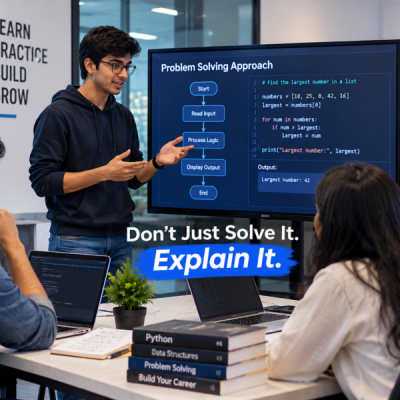
However, adding a project to a resume is not enough. Students should also be able to explain what they built and how they built it.
FMI encourages students to understand their projects properly.
Students can prepare to explain:
- The purpose of the project
- Their role
- Technologies used
- Challenges faced
- Solutions implemented
- Final results
This can help them answer project-related questions with greater confidence.
6. Job Opportunity Guidance
Finding suitable jobs can be difficult for freshers.
Students may not know which positions match their skills. They may also apply for roles that do not fit their experience.
Placement support can help students understand suitable job roles and opportunities.
This gives students a more organized approach to their job search.
7. Support for Different IT Careers
FMI offers training across several IT fields.
Students can prepare for roles related to:
- Full Stack Development
- Software Testing
- Digital Marketing
- Python
- Data Science
- Data Analytics
- C and C++
Placement preparation can be aligned with the student’s chosen field.
This helps students focus on the skills and questions that matter for their target role.
From Training to Job: A Simple Journey
The journey from learning to employment does not happen overnight.
It usually involves several steps.
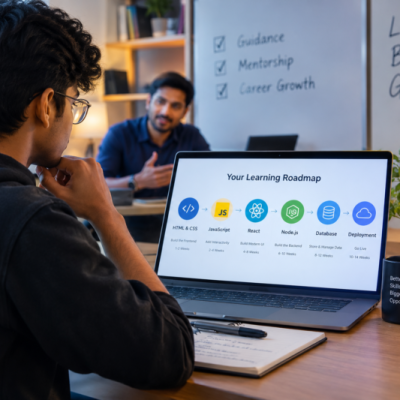
Step 1: Learn the fundamentals
Students first build knowledge in their chosen field.
Step 2: Practice the skills
Hands-on assignments help students apply what they learn.
Step 3: Build projects
Projects provide practical experience and strengthen the resume.
Step 4: Prepare the resume
Students learn how to present their skills and projects professionally.
Step 5: Practice interviews
Mock interviews help students improve their answers and communication.
Step 6: Apply for jobs
Students begin applying for relevant positions and attending interviews.
Step 7: Learn from feedback
Every interview provides an opportunity to improve.
This process can help freshers approach the job search with more confidence.
Why Practical Skills Matter
Employers often look beyond certificates.
They want candidates who can understand problems and apply their knowledge.
That is why practical projects are important.
At FMI, students can combine classroom learning with hands-on practice. This gives them an opportunity to understand how their skills work in practical situations.
The placement cell then helps students prepare to present these skills during interviews.
Helping Students Build Confidence
For many freshers, the biggest challenge is not learning technology. It is confidence.
Students may know the answer but hesitate during an interview.
Regular practice can help reduce this hesitation.
Resume guidance, mock interviews, project discussions, and career support can help students feel better prepared.
Confidence grows when students know what to expect.
What Makes Placement Support Valuable?
A useful placement process should offer more than job updates.
Students also need guidance throughout the preparation process.
FMI’s placement support focuses on areas such as:
- Career guidance
- Resume preparation
- Interview preparation
- Technical interview practice
- Mock interviews
- Project presentation
- Job opportunity guidance
Together, these steps can create a smoother transition from training to the job search.
100+ Students and Their IT Career Journey
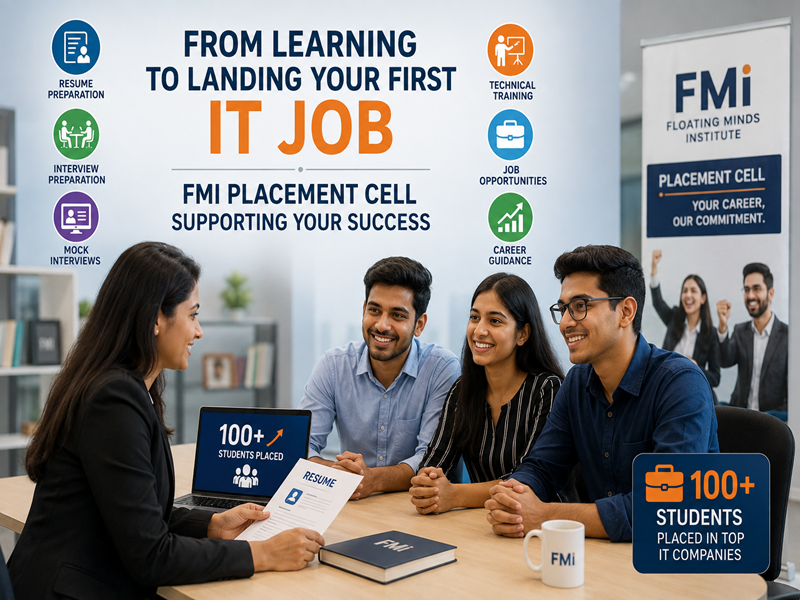
FMI’s placement cell has supported 100+ students in their journey toward their first IT job.
Every student’s journey is different. Some may be fresh graduates. Others may be changing careers or starting without a technical background.
However, the goal remains the same: build the right skills and prepare for real job opportunities.
The combination of technical training and placement guidance can help students take that next step.
Is Placement Support Enough to Get a Job?
Placement support can provide guidance and opportunities. However, students also need to put in consistent effort.
Your results depend on several factors, including:
- Technical skills
- Project experience
- Interview performance
- Communication
- Resume quality
- Job market conditions
- Consistent applications
Students who actively practice and improve their skills are better prepared to make use of placement opportunities.
Final Thoughts
Getting your first IT job can feel difficult. However, the right training and guidance can make the process more structured.
FMI’s placement cell supports students through resume preparation, interview practice, project guidance, and job search support.
The goal is simple: help students move from learning IT skills to confidently applying for IT jobs.
If you are planning to start your IT career, choose a training program that supports both skill development and career preparation.
Learn the skills. Build your confidence. Prepare for your first IT job.