Introduction
Data-driven careers are growing faster than ever. In 2026, companies rely on data to make better business decisions. As a result, professionals who can work with data are in high demand.
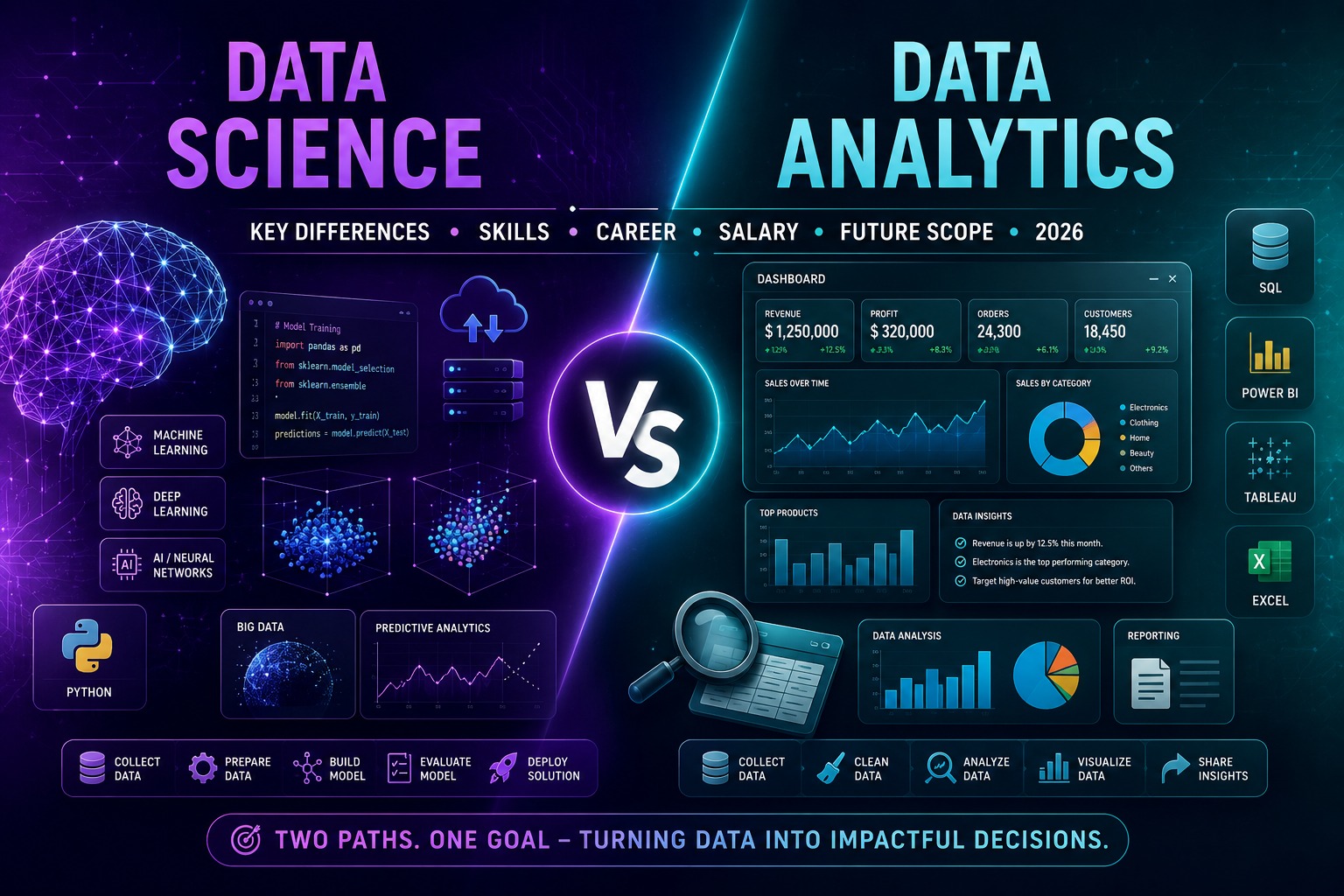
Two of the most popular career options are Data Science and Data Analytics. While both fields work with data, their roles and responsibilities differ. Understanding Data Science vs Data Analytics can help you choose the right career path.
What is Data Science?
Data Science is the process of collecting, analyzing, and interpreting large amounts of data. It helps businesses predict future trends and solve complex problems.
Key Responsibilities:
- Building machine learning models
- Analyzing large datasets
- Creating predictive algorithms
- Automating data-driven processes
Skills Required:
- Python and R programming
- Machine Learning
- Statistics
- Data Visualization
- Big Data Technologies
Career Opportunities:
- Data Scientist
- Machine Learning Engineer
- AI Specialist
- Data Engineer
Furthermore, Data Science is ideal for those who enjoy coding, mathematics, and problem-solving.
What is Data Analytics?
Data Analytics focuses on examining existing data to identify trends and insights. It helps organizations make informed business decisions.
Key Responsibilities:
- Analyzing business data
- Creating reports and dashboards
- Identifying trends and patterns
- Supporting business strategies
Skills Required:
- Excel
- SQL
- Power BI
- Tableau
- Data Visualization
Career Opportunities:
- Data Analyst
- Business Analyst
- Reporting Analyst
- Market Research Analyst
Additionally, Data Analytics is suitable for those who enjoy working with numbers and business insights.
Data Science vs Data Analytics: Key Differences
| Feature | Data Science | Data Analytics |
|---|---|---|
| Purpose | Predict future outcomes | Analyze past and current data |
| Tools Used | Python, R, TensorFlow | Excel, SQL, Power BI, Tableau |
| Programming Requirements | High | Moderate |
| Data Handling | Large and complex datasets | Structured business data |
| Career Scope | AI, ML, Automation | Business Intelligence, Reporting |
| Salary Potential | Generally higher | Competitive and stable |
When comparing Data Science vs Data Analytics, the biggest difference lies in prediction versus analysis.
Which Career Should You Choose in 2026?
Choose Data Science if you:
- Enjoy programming and machine learning
- Like solving complex problems
- Want to work with AI technologies
Choose Data Analytics if you:
- Prefer business-focused roles
- Enjoy data visualization
- Like creating reports and insights
However, both careers offer excellent growth opportunities. Therefore, your choice should depend on your interests and strengths.
As a result of digital transformation, demand for both roles is expected to rise significantly in 2026 and beyond.
Learn Data Science and Data Analytics with Floating Minds Institute
If you want to build a successful career in data, Floating Minds Institute can help you get started.
As the Best IT Training Institute in Hadapsar, Floating Minds Institute provides industry-oriented training designed for beginners and professionals.
Why choose Floating Minds Infotech?
- Hands-on practical projects
- Expert industry trainers
- Updated course curriculum
- Real-world case studies
- Placement assistance
- Career guidance sessions
Whether you are looking for a Data Science Course in Hadapsar or a Data Analytics Course in Hadapsar, Floating Minds Institute offers comprehensive training to help you become job-ready.
Conclusion
Understanding Data Science vs Data Analytics is important before choosing a career path. Data Science focuses on predictive modeling and advanced technologies. In contrast, Data Analytics focuses on interpreting data for business decisions.
Finally, both fields offer strong career growth and attractive salaries. Choose the path that matches your interests and career goals. Enroll at Floating Minds Infotech today and take the first step toward a rewarding data-driven career in 2026.