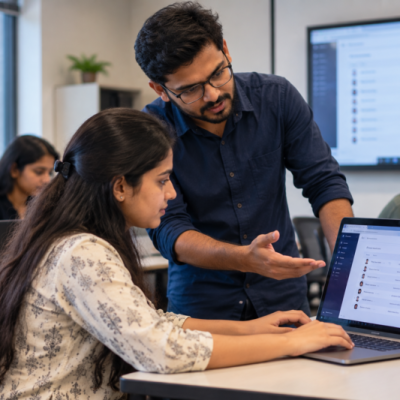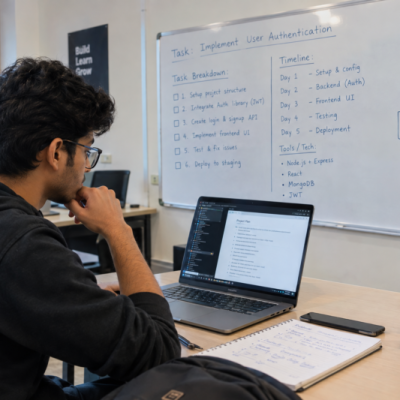
A student builds a simple website.
It has a registration form. Users enter their name, email address and phone number. The information goes into a database.
The project works.
But there is another question that many students may forget to ask:
Who should be able to see that information?
This is where data privacy becomes important.
IT students may learn programming, databases and web development. However, they should also understand how software handles information about real people. Therefore, the Best IT Training Institute in Hadapsar should help students build basic privacy habits along with technical skills.
What Is Data Privacy in Simple Terms?
Data privacy is about how information about people is collected, used, stored and shared.
In simple terms, it means treating user information carefully.
For example, a shopping website may collect a customer’s name, email address and delivery details. A learning platform may store student information. A mobile application may ask for access to certain device features.
Therefore, software developers need to think about more than whether the application works.
They also need to think about what information the application handles and why.
Why Should IT Students Care About Data Privacy?
At first, privacy may seem like a topic for large companies.
However, even a small student project can involve personal information.
Consider a simple college management application.
It might contain:
- Student names
- Phone numbers
- Email addresses
- Course details
- Login information
- Attendance records
If this information is stored carelessly, it can create problems.
As a result, students should learn privacy basics before they start working with real business systems.
What Counts as Personal Data?
Personal data is information that relates to a person.
Some examples are easy to identify.
A person’s name, phone number and email address are obvious examples.
However, other information may also matter depending on how it is used.
For example, an account ID, location information or user activity may provide information about a particular person.
Therefore, students should avoid thinking only about obvious details such as names.
A better habit is to ask:
“Can this information be connected to a person?”
If the answer is yes, it deserves careful handling.
Why Should the Best IT Training Institute in Hadapsar Teach Privacy Basics?
Technical training should prepare students for more than writing code.
In real software work, developers may work with databases, customer accounts, internal systems and business information.
Therefore, privacy should become part of practical learning.
For example, a student building a registration system can be asked:
- What information does the form collect?
- Does the application really need all of it?
- Who can access the database?
- Where is the information stored?
- Can unnecessary information be removed?
These questions turn privacy from a theory topic into a practical habit.
What Are Common Privacy Mistakes IT Students Should Avoid?
Small mistakes can create unnecessary risks.
Collecting Too Much Information
A form should not ask for information simply because it can.
If an application only needs an email address, collecting several additional details may not be necessary.
Therefore, students should think about the purpose of every field.
Sharing User Data Without a Reason
Data should not be copied or shared casually.
For example, a student should not post a database containing real user information in a public project repository.
Leaving Sensitive Information in Code
Passwords, private keys and other sensitive values should not simply be placed inside source code.
Instead, students should learn basic methods for keeping sensitive information separate from application code.
Giving Everyone Access
Not every person needs access to every piece of information.
For example, a user may need access to their own account while an administrator may have different access.
Therefore, access should be considered carefully.
Should Students Use Real User Data While Learning?
Usually, sample data is a much safer choice for student practice.
Imagine a student is building a customer management application.
Instead of using actual customer names and phone numbers, the student can create fictional records.
For example:
Name: Rahul Patil
Email: rahul@example.com
Phone: 9000000000
The information can still be used to test the application.
However, it does not expose someone’s actual personal information.
As a result, students can practise database operations without creating unnecessary privacy concerns.
How Does Data Privacy Affect Software Development?
Privacy can influence many parts of an application.
During Data Collection
Developers should understand what information the application needs.
During Storage
The application should handle stored information carefully.
During Access
Users should only receive access that is appropriate for their role.
During Sharing
Developers should understand where information is going and why.
During Deletion
Unnecessary information should not be kept forever without a reason.
Therefore, privacy is not something that should be considered only after the application is finished.
It can influence the project from the beginning.
What Can Students Do to Build Better Privacy Habits?
Students do not need to become privacy specialists immediately.
Instead, they can start with a few simple habits.
Ask Why Data Is Needed
Before creating a database field, ask what purpose it serves.
Use Test Data
Whenever possible, use fictional information for practice projects.
Protect Sensitive Information
Do not casually share passwords, keys or private information.
Check Access
Think about who can view or change stored information.
Remove Unnecessary Data
If information is no longer needed for the project, consider whether it should still be stored.
These habits are simple.
However, they can make students more aware of how their technical decisions affect users.
Can Privacy Knowledge Help During a First IT Job?
Yes.
Freshers may work with systems that contain information belonging to customers, employees or businesses.
They may not be responsible for major security decisions.
Still, they can make day-to-day choices about how information is handled.
For example, a developer may receive a database export while testing a feature.
A careful employee will think about where that file is stored, who can access it and whether real data is actually required.
That kind of thinking can prevent avoidable mistakes.
How Can Students Practise Data Privacy in Projects?
Students can add a small privacy check to every project.
Before completing an application, they can ask:
What data does my application collect?
Why does it collect this data?
Where is the data stored?
Who can access it?
Am I using real or fictional data?
What information can be removed?
This simple checklist can become part of the development process.
For instance, a student creating a college attendance application can use fictional student records. They can also create different user roles and test what each role can access.
As a result, the project demonstrates both technical knowledge and responsible thinking.
Is Data Privacy Only a Cybersecurity Topic?
Not entirely.
Cybersecurity and privacy are closely connected, but they are not exactly the same thing.
Security focuses heavily on protecting systems and information from unauthorised access or misuse.
Privacy also asks questions about how information is collected and used.
For example, an application may securely store information that it never really needed to collect.
Therefore, secure storage alone does not answer every privacy question.
IT students should understand both ideas at a basic level.
Why Is Privacy Awareness Useful in 2026?
Software now touches many parts of everyday life.
People use applications for shopping, banking, education, communication and entertainment.
As a result, technical decisions can affect information that belongs to real people.
Students entering the IT industry should understand this responsibility early.
Moreover, developers now have access to many tools that can process large amounts of information. That makes it even more important to understand what information is being used and where it goes.
Good technical work is not only about making something function.
It is also about thinking carefully about its impact.
How Can Practical Training Make Students More Privacy-Aware?
A classroom project can include privacy questions alongside programming tasks.
For example, a trainer can ask students to build a simple registration application.
The technical task may include creating the form, database and login system.
However, students can also be asked to explain:
- Why each data field is required.
- Which users can access the information.
- What test data is being used.
- How unnecessary information would be removed.
This creates a more realistic learning experience.
At Floating Minds Institute, practical IT education can help students connect classroom concepts with the habits needed in real software environments.
Final Thoughts: Privacy Is Part of Responsible IT Work
An IT student does not need to become a privacy expert before getting their first job.
However, they should understand one simple idea:
Software can affect real people’s information.
That means developers need to think carefully about what they collect, where they store it and who can access it.
Therefore, students searching for the Best IT Training Institute in Hadapsar can look for learning environments that go beyond coding exercises.
Technical skills matter.
At the same time, responsible technical habits matter too.
When students learn to think about privacy early, they are better prepared to build software with greater care and awareness.