Learning coding as a beginner can be challenging. You have to understand new concepts, practice regularly, and solve problems on your own. At times, you may feel confused or lose motivation.
The good news is that you do not need to study for many hours every day. A simple routine and regular practice can help you make steady progress.
Why Consistency Matters in Coding
Coding is a practical skill. Reading tutorials can help you understand concepts, but writing code helps you remember them.
Regular practice can help you:
- Improve problem-solving skills
- Understand programming concepts better
- Become more comfortable with errors
- Build confidence
- Develop a strong coding habit
Even 30–60 minutes of practice each day can make a difference.
1. Set Small and Clear Goals
Avoid trying to learn everything at once.
Choose one topic and focus on it. For example, you can learn variables today and practice loops tomorrow.
Break large goals into smaller tasks.
This makes learning easier and helps you see progress.
2. Create a Simple Coding Routine
Set a fixed time for coding each day.
For example:
- 20 minutes for learning
- 30 minutes for coding practice
- 10 minutes for revision
You can adjust the routine based on your schedule.
The important part is to follow it regularly.
3. Practice More Than You Watch
Watching coding tutorials is useful, but it should not replace practice.
After learning a concept, write some code yourself.
Try changing the example from the tutorial. Then create a small problem and solve it without looking at the answer.
This helps you develop independent problem-solving skills.
4. Start With Small Projects
Projects make coding more interesting.
Start with simple projects such as:
- Calculator
- To-do list
- Quiz application
- Number guessing game
- Student management system
- Personal portfolio website
Once you become comfortable, you can move to larger projects.
5. Learn From Coding Errors
Errors are part of programming.
Your code may not work on the first attempt. Instead of giving up, read the error message and find the cause.
Ask yourself:
What went wrong? Why did it happen? How can I fix it?
Learning to debug will make you a better programmer.
6. Follow One Learning Path
There are thousands of coding tutorials online.
Jumping between different courses can create confusion.
Choose one programming language and follow a structured learning path.
For example, if you choose Java, focus on Java fundamentals before moving to advanced frameworks.
7. Track Your Progress
Keep a simple record of what you learn.
You can write down:
- Topics completed
- Problems solved
- Projects built
- Topics that need revision
Seeing your progress can motivate you to continue.
8. Do Not Compare Yourself With Others
Every beginner learns at a different speed.
Someone may understand a concept quickly, while you may need more practice.
That is normal.
Focus on your own improvement instead of comparing yourself with other students or developers.
9. Take Breaks
Consistency does not mean coding all day.
If you feel tired or frustrated, take a short break. Return to the problem later with a fresh mind.
A sustainable routine is better than studying intensely for a few days and then stopping.
10. Get Guidance When You Need It
Sometimes, a small doubt can take hours to solve.
Do not hesitate to ask a trainer, mentor, or experienced developer for help.
Proper guidance can help you understand difficult topics faster and avoid common mistakes.
11. Use AI as a Learning Tool
AI tools can also support your coding journey.
You can use AI to:
- Explain difficult concepts
- Understand error messages
- Find mistakes in your code
- Generate practice questions
- Get project ideas
However, do not copy solutions without understanding them.
Try to solve the problem yourself first. Then use AI to improve your understanding.
A Simple Weekly Coding Plan
You can follow a simple weekly routine:
Monday: Learn a new concept
Tuesday: Practice basic problems
Wednesday: Solve coding exercises
Thursday: Revise previous topics
Friday: Practice problem-solving
Saturday: Work on a small project
Sunday: Review your progress
You can change this schedule according to your routine.
Common Mistakes to Avoid
Beginners often make a few common mistakes:
- Trying to learn too many languages at once
- Watching tutorials without practicing
- Giving up after seeing errors
- Skipping projects
- Comparing progress with others
- Changing courses too frequently
Avoiding these mistakes can make your learning journey smoother.
Final Thoughts
Learning coding takes time and practice. You do not need to master everything in a few weeks.
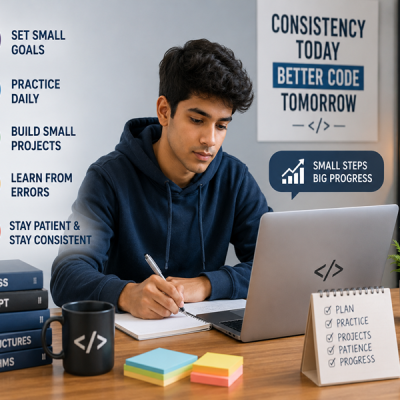
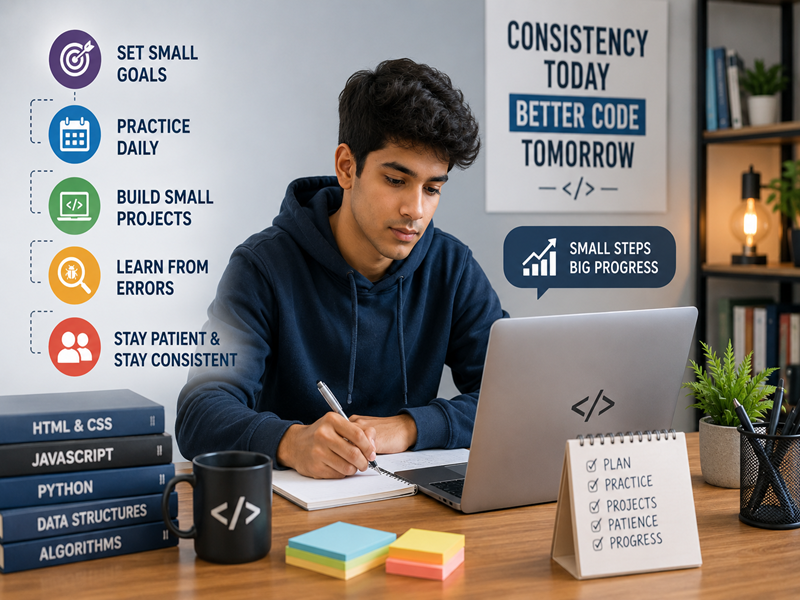
Set small goals, follow a routine, practice regularly, and build simple projects. When you make mistakes, use them as learning opportunities.
Most importantly, stay consistent even when progress feels slow.
Learn today. Practice tomorrow. Keep building until coding becomes a skill you can trust.