
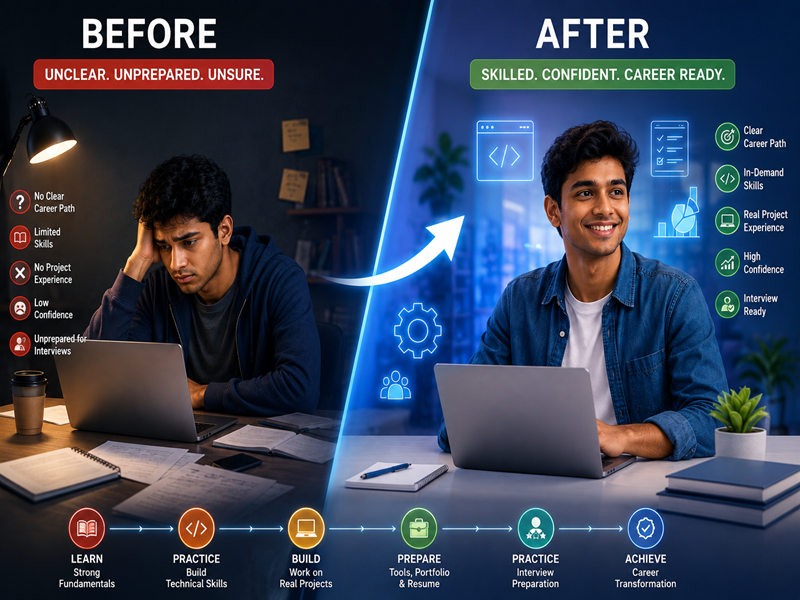
Starting a career in IT can feel confusing for a fresher. You may have a degree, but still wonder what companies expect from you. The gap between academic knowledge and job-ready skills can be challenging. A structured IT course can help bridge that gap through practical learning, projects, mentorship, and interview preparation. Here is a simple six-month before-and-after journey that shows how focused IT training can help a fresher become more confident and career-ready. Before Joining an IT Course Many freshers start their job search with limited practical experience. They may have: Having a degree is valuable, but employers may also look for practical skills. This is where structured training can help. Month 1: Understanding the Basics The first step is building strong fundamentals. A fresher can choose a career path based on their interests, such as: The focus should be on understanding the basics instead of rushing through advanced topics. Before: Unsure about what to learn. After: Clear about the chosen career path and learning goals. Month 2: Building Technical Skills Once the basics are clear, students can start developing job-related skills. For example, a Full Stack student may learn HTML, CSS, JavaScript, Java, and databases. A Software Testing student may learn manual testing, test cases, Selenium, and JIRA. A Digital Marketing student may learn SEO, Google Ads, social media marketing, and analytics. Before: Mostly theoretical knowledge. After: Better understanding of practical technical concepts. Month 3: Working on Projects Projects are an important part of IT learning. Instead of only watching tutorials, students can start applying their knowledge. They may build a website, test an application, analyze data, or create a digital marketing campaign. Projects help students understand how different concepts work together. Before: No real project experience. After: Practical work that can be added to a portfolio. Month 4: Learning Industry Tools IT professionals use different tools in their daily work. During this stage, students can become familiar with tools used in their chosen field. For example: Before: Limited knowledge of professional tools. After: More confidence using relevant industry tools. Month 5: Building a Portfolio A resume can tell employers what you have learned. A portfolio can show them what you can do. Students can organize their best projects and highlight the skills used in each one. They can also identify weak areas and spend extra time improving them. Before: A resume with mostly academic information. After: A resume supported by practical projects and relevant skills. Month 6: Preparing for the Job Market Technical knowledge is only one part of getting hired. Students also need to prepare for interviews. The final stage can include: Students can also start applying for suitable internships and entry-level roles. Before: Nervous about interviews. After: Better prepared to explain skills, projects, and career goals. The Transformation: Before vs After Before IT Training After 6 Months of Structured Learning Unclear career direction Clear career path Mostly theoretical knowledge Practical technical skills Little project experience Portfolio projects Limited tool knowledge Experience with industry tools Low interview confidence Regular interview practice Basic resume Skill-focused resume Unsure about job applications Better job-search preparation The exact results will differ from one student to another. Progress also depends on consistency, practice, and effort. What Makes the Difference? An IT course does not create overnight success. The real transformation comes from consistent learning and practical application. Students need to attend classes, complete assignments, work on projects, ask questions, and practice outside the classroom. Mentorship can make this process easier by providing direction and feedback. Why Practical IT Training Matters Many freshers know the theory but struggle to apply it. Practical training helps close this gap. When students work on projects, they learn how to solve problems and handle mistakes. They also become more comfortable explaining their work. These experiences can be useful during technical interviews. Is Six Months Enough? Six months can provide a strong foundation for an entry-level IT career when the learning plan is structured and focused. However, students should not treat six months as a guarantee of a job. Career progress depends on several factors, including: The goal should be to become job-ready, not simply to finish a course. Final Thoughts The journey from a fresher with limited practical experience to a confident job seeker does not happen overnight. A structured six-month IT course can help students build fundamentals, learn industry tools, complete projects, create a portfolio, and prepare for interviews. The biggest change is often not just the skills on a resume. It is the confidence to say: “I know what I have learned, I can demonstrate it, and I am ready to keep growing.” For freshers looking to start an IT career, the right training, consistent practice, and practical experience can make the journey much clearer.