
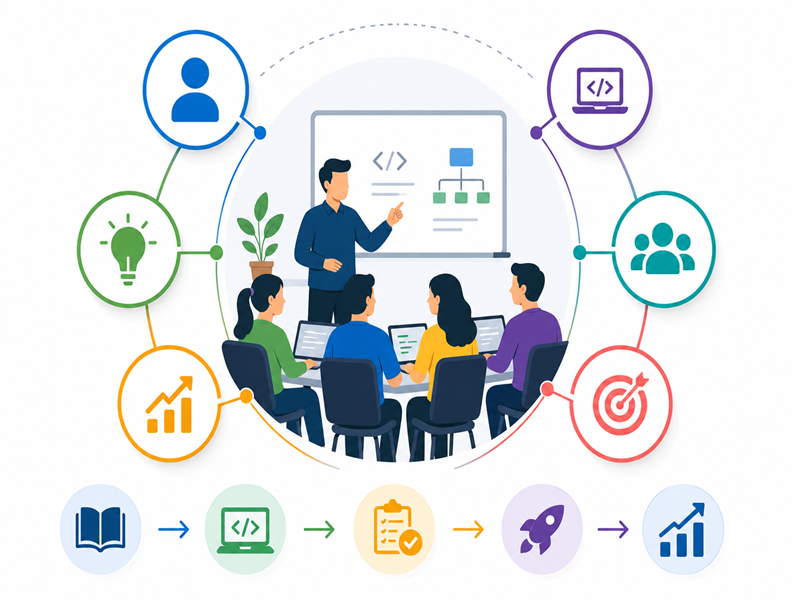
Choosing the right learning environment can make a big difference in how students understand and apply new skills. In traditional classrooms, large batches can make it difficult for trainers to give every student enough attention. Micro batch training offers a more focused learning experience. With fewer students in each batch, trainers can spend more time answering questions, checking progress, and helping students improve. For technical courses such as Full Stack Development, Software Testing, Data Science, and Digital Marketing, this approach can be especially useful. What Is Micro Batch Training? Micro batch training means teaching a small group of students in one class. Instead of having a crowded classroom, students learn in a smaller group. This allows trainers to interact more closely with each learner. Students can ask questions, practice concepts, and receive feedback during the session. The goal is simple: better attention, better practice, and better understanding. 1. Students Get More Individual Attention In a large class, trainers may not have enough time to focus on every student. Some students may understand a topic quickly, while others may need more explanation. Micro batches make it easier for trainers to identify these differences. Students can receive individual guidance when they need it. 2. Students Can Ask More Questions Questions are an important part of learning. However, students may hesitate to ask questions in a large classroom. A smaller group can create a more comfortable learning environment. Students can ask questions during the session and get answers before moving to the next topic. 3. Trainers Can Understand Student Progress Every student learns at a different pace. With a smaller batch, trainers can track student progress more closely. They can identify topics that students find difficult and spend more time explaining them. This helps prevent small learning gaps from becoming bigger problems. 4. More Time for Practical Learning Technical skills require practice. Students need to write code, test applications, analyze data, or create marketing campaigns to understand how concepts work. Micro batches can provide more opportunities for hands-on activities. Instead of only listening to a lecture, students can spend more time applying what they learn. 5. Better Doubt-Solving A small doubt can sometimes stop a student from understanding an entire topic. In a large class, it may be difficult to get immediate help. Micro batch training allows trainers to address doubts more effectively. This can help students move forward with greater clarity. 6. Better Student-Trainer Interaction Learning becomes more engaging when students can interact with their trainer. In a smaller group, students can participate in discussions, answer questions, and share their approach to problems. This creates a more interactive classroom experience. 7. More Confidence During Practice Students often become more confident when they receive regular feedback. A trainer can review their assignments, explain mistakes, and suggest improvements. Over time, students become more comfortable solving problems independently. This confidence can also help during technical interviews. 8. Easier Learning for Beginners Beginners may need extra support when learning technical subjects. Programming concepts, testing tools, databases, or analytics can seem difficult at first. Micro batch training gives beginners more opportunities to ask questions and practice with guidance. This can make the learning process less overwhelming. 9. Stronger Focus on Projects Projects help students connect theory with practical work. In a micro batch, trainers can provide closer project guidance. Students can discuss their ideas, solve problems, and improve their projects with feedback. This helps them understand how their skills can be used in real-world situations. 10. Better Learning Outcomes The main benefit of micro batch training is the overall learning experience. Students get: These factors can help students understand concepts instead of simply memorizing them. Micro Batch Training vs Large Batches Micro Batch Training Large Batch Training More individual attention Limited individual attention Easier doubt-solving Questions may take longer More student participation Less participation Better progress tracking Harder to track everyone More practical interaction More focus on group teaching The right choice depends on the student’s learning style. However, students who prefer personal guidance may benefit from a smaller classroom. Who Can Benefit From Micro Batch Training? Micro batch training can be useful for: It is especially helpful for learners who need regular feedback and practical guidance. Why Practical Training Matters Learning a technical skill is not only about completing a syllabus. Students need to understand how to use their knowledge. For example, a programming student should write and debug code. A testing student should practice test cases. A digital marketing student should work on campaigns and analytics. Practical learning becomes easier when trainers have enough time to guide each student. Final Thoughts Micro batch training creates a more focused and interactive learning environment. Students receive more attention, ask questions freely, practice more, and get regular feedback. For students preparing for an IT career, these benefits can make technical learning more effective. A smaller batch can create more opportunities to learn, practice, and improve.